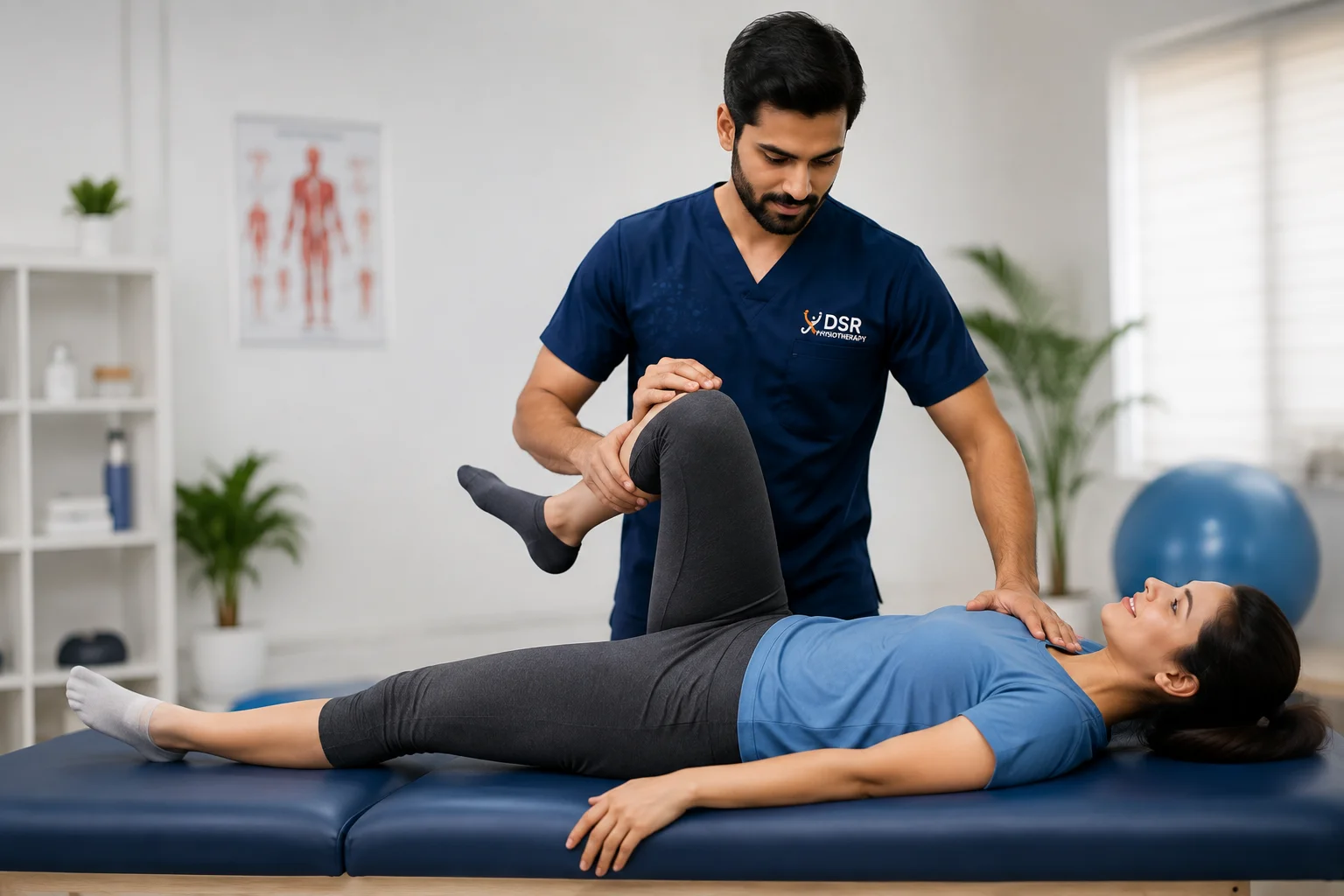
A sports injury can affect more than muscle strength and joint movement. It can also change how your body maintains balance during everyday activities and sports movements. You may notice difficulty standing on one leg, changing direction, landing after a jump, or moving confidently on an uneven surface.
These problems can occur after injuries involving the ankle, knee, ligaments, or muscles. Even when pain starts to improve, your body may still need time to regain coordination and stability.
This is why Balance Training After Sports Injury is an important part of a well-planned rehabilitation programme. It helps retrain the body to control movement, maintain stability, and respond to changes in position.
Balance exercises are not just for athletes who have injured their ankles. They can also be useful during rehabilitation after selected knee and lower-limb injuries. The exercises and their intensity must match the injury, healing stage, and individual’s physical ability.
What Happens to Your Balance After a Sports Injury?
Balance is the ability to keep your body stable while standing still or moving. It depends on coordination between your brain, muscles, joints, eyes, and inner ear.
After a sports injury, this coordination may become less efficient. Pain, swelling, reduced joint movement, muscle weakness, and changes in joint sensation can affect how your body controls movement.
For example, an ankle sprain may affect your ability to sense the position of your foot and ankle. You may feel unstable while standing on the injured leg. Similarly, a knee injury can affect lower-limb control during walking, running, jumping, and landing.
Some common signs of reduced balance after a sports injury include:
- Difficulty standing on the injured leg.
- Feeling unstable while walking or turning.
- Poor control when stepping onto an uneven surface.
- Difficulty maintaining balance after jumping or landing.
- Reduced confidence while changing direction.
- Feeling that the injured joint may give way during activity.
These signs do not automatically mean that the injury is still severe. However, they may indicate that rehabilitation needs to address balance, strength, coordination, and movement control.
What Is Proprioception and Why Does It important?
Proprioception is your body’s ability to sense the position and movement of different body parts without constantly looking at them.
For example, when you run, jump, or change direction, you do not need to look at your feet every moment. Your nervous system receives information from receptors in muscles, tendons, and joints. It uses this information to help control movement.
A sports injury can affect this sensory feedback. An injured ankle or knee may not respond as accurately during certain movements. As a result, you may experience reduced stability or difficulty controlling the affected limb.
Balance and proprioceptive training help challenge the body’s movement-control system through carefully selected exercises. These may include standing on one leg, controlled weight shifting, and progressive movement tasks.
Clinical guidelines for ankle sprain rehabilitation include balance training and neuromuscular exercises as part of structured recovery. The programme should be selected according to the person’s injury and assessment findings.
Why Is Balance Training Important After a Sports Injury?
Balance training plays an important role in restoring control and stability after a sports injury. It helps your body manage movements that require coordination between different muscles and joints.
Here are some important benefits.
1. Improves Joint Stability
After an ankle or knee injury, the affected joint may feel unstable during movement. Balance exercises challenge the muscles around that joint to maintain better control.
For example, controlled single-leg exercises can help improve lower-limb stability. A physiotherapist can adjust the difficulty according to your strength, symptoms, and recovery stage.
2. Helps Restore Proprioception
Injuries can affect the sensory feedback that helps your body recognise joint position and movement.
Proprioceptive exercises retrain this movement-control system. They help your body respond to changes in position during activities such as walking, running, and changing direction.
3. Improves Movement Coordination
Sports often involve quick movements. You may need to jump, land, turn, or move sideways within seconds.
Balance training helps develop better coordination between the muscles responsible for controlling these movements. This is especially useful when progressing towards sport-specific rehabilitation.
4. Supports Injury Prevention
An athlete who has experienced an ankle sprain may have a higher risk of another sprain. Rehabilitation that includes balance and proprioceptive exercises can help address some of the factors associated with recurrent ankle injuries.
However, balance training alone cannot prevent every sports injury. Strength, mobility, appropriate footwear, sport technique, and gradual training progression also matter.
5. Builds Confidence During Physical Activity
After an injury, some athletes hesitate to put full weight on the affected leg. They may feel uncomfortable while jumping, landing, or changing direction.
Progressive balance exercises help them practise controlled movements in a supervised setting. This can improve confidence as physical ability returns.
Which Sports Injuries May Require Balance Training?
Balance training may be included in rehabilitation for several types of sports injuries. The exact programme depends on the injured structure and the person’s functional limitations.
Ankle Sprains: An ankle sprain can affect ligament function, joint movement, and proprioception. Balance exercises are commonly included in ankle rehabilitation to improve stability and address the risk of recurrent sprains.
ACL and Other Knee Injuries: Knee injuries can affect lower-limb control during walking, running, jumping, and landing. Balance and motor-control exercises may form part of a broader rehabilitation programme after an ACL injury or reconstruction.
Muscle Injuries: Some muscle injuries can affect strength and coordination. Once appropriate healing has occurred, controlled balance activities may help restore functional movement.
Ligament Injuries: Injuries involving ligaments can affect joint stability. Rehabilitation may include balance, strengthening, and movement-control exercises to prepare the joint for increasing activity.
For an appropriate rehabilitation plan, consult a qualified physiotherapist. You can explore the sports injury physiotherapy services in Ghaziabad to understand the available support.
Common Balance Training Exercises After a Sports Injury
A physiotherapist may introduce different exercises as your recovery progresses. The starting level should be comfortable and safe. More challenging exercises should only begin when your injury can tolerate them.
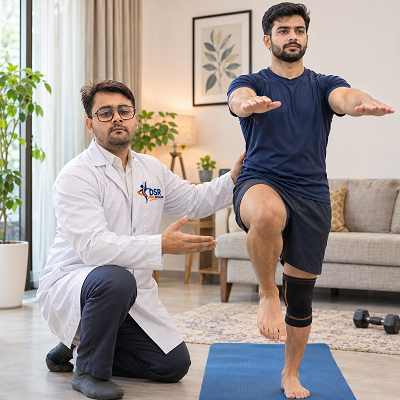
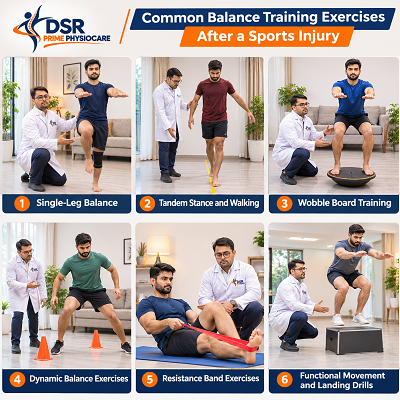
1. Single-Leg Balance
Stand on one leg while keeping your body upright. Maintain a stable position without allowing the standing knee to collapse inward.
This exercise challenges lower-limb control and balance. It may be progressed by increasing the holding time or adding controlled arm movements.
2. Tandem Stance and Walking
Place one foot directly in front of the other, as if standing on a straight line. Maintain your balance.
For tandem walking, take slow steps along an imaginary straight line. This exercise challenges postural control and coordination.
3. Wobble Board or Balance Board Training
A wobble board creates an unstable surface. The user works to control the board while maintaining a stable body position.
This exercise can challenge ankle and lower-limb control. It should only be introduced when the injured joint is ready for this level of loading.
4. Dynamic Balance Exercises
Dynamic balance exercises involve maintaining control while moving. Examples include controlled weight shifting, reaching in different directions, and stepping forward or sideways.
These activities help prepare the body for more complex movements used in sports.
5. Resistance Band Exercises
Resistance bands can add controlled resistance to selected movements. A physiotherapist may use them to challenge muscle control around the ankle, knee, or hip.
The exercise should target the movement limitation identified during assessment.
6. Functional Movement and Landing Drills
Later rehabilitation stages may include controlled squats, step-downs, hopping progressions, and landing drills.
These exercises help assess and develop movement control during activities that are closer to the demands of a particular sport. They should not be attempted early in recovery without appropriate assessment and clearance.
How Do Physiotherapists Assess Balance After a Sports Injury?
Before starting balance exercises, a physiotherapist should assess the injured area and the person’s movement ability. This helps identify limitations and select suitable exercises.
A sports injury balance assessment may include:
- Single-leg balance: Checks how well you maintain stability while standing on one leg.
- Gait assessment: Observes walking pattern, weight distribution, and movement control.
- Muscle strength testing: Checks whether weakness affects joint stability.
- Joint mobility assessment: Identifies restrictions that may affect movement.
- Functional movement assessment: Observes activities such as squatting, stepping, and controlled landing.
- Y-Balance Test: Evaluates dynamic balance by measuring how far a person can reach in different directions while maintaining control on one leg.
The Y-Balance Test can provide useful information about dynamic balance and lower-limb control. However, it should not be used alone to decide whether an athlete is ready to return to sport. Pain, strength, movement quality, injury-specific recovery, and sport demands must also be considered.
At DSR Prime Physiocare, rehabilitation may include single-leg balance exercises, tandem walking, wobble board training, resistance band exercises, and functional movement drills. The physiotherapist selects and progresses these activities according to the individual’s assessment.
When Should You Start Balance Training After a Sports Injury?
The right time depends on the type and severity of the injury.
Some gentle balance activities may begin during the early rehabilitation stage when pain, swelling, and joint stability allow. More challenging exercises, such as wobble board training, hopping, and landing drills, usually require greater recovery and movement control.
A typical progression may include:
- Early stage: Pain management, suitable mobility exercises, and basic muscle activation.
- Intermediate stage: Supported weight shifting, controlled standing, and basic balance exercises.
- Advanced stage: Single-leg balance, dynamic movements, and progressive resistance exercises.
- Sports-specific stage: Controlled jumping, landing, hopping, and direction-changing drills.
This is a general example, not a fixed recovery schedule. Follow your treating physiotherapist’s advice, especially after surgery or significant ligament injuries.
How Does Balance Training Help You Return to Sports?
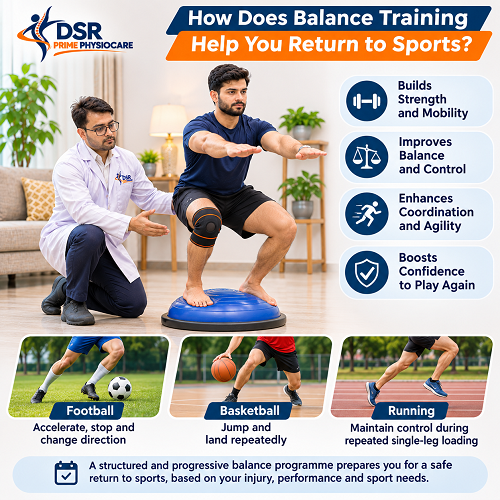
Returning to sports requires more than reduced pain. You also need sufficient strength, mobility, coordination, and confidence to perform sport-specific movements.
For example, a football player may need to accelerate, stop suddenly, and change direction. A basketball player may need to jump and land repeatedly. A runner needs control during repeated single-leg loading.
Progressive balance training can help prepare the body for these demands. However, return-to-sport decisions should consider the injury, functional performance, psychological readiness, and the specific requirements of the sport.
Can You Do Balance Training at Home?
Some basic balance exercises can be performed at home after a physiotherapist has confirmed that they are suitable. However, avoid practising on unstable surfaces or attempting advanced drills without guidance.
People who have difficulty travelling during rehabilitation may consider home physiotherapy in Ghaziabad. A physiotherapist can assess movement, demonstrate suitable exercises, and guide progression according to recovery.
Stop an exercise if it causes sharp pain, significant swelling, or a feeling that the injured joint is giving way. Seek professional advice before continuing.
Frequently Asked Questions
1. Is balance training necessary after an ankle sprain?
Balance and proprioceptive exercises are commonly included in ankle sprain rehabilitation. They help address stability and movement-control problems and may reduce the risk of recurrent sprains.
2. Can balance exercises help after an ACL injury?
Yes. Balance and neuromuscular exercises may form part of ACL rehabilitation. However, they must be combined with appropriate strengthening, mobility, and functional training.
3. How often should I practise balance exercises?
Frequency depends on your injury, recovery stage, and exercise programme. Follow the schedule recommended by your physiotherapist rather than increasing exercise time independently.
4. Does balance training help prevent future sports injuries?
It can help address certain injury risk factors, particularly after ankle sprains. However, injury prevention also requires suitable strength, conditioning, technique, and training-load management.
5. Can I start balance exercises if I still have pain?
Do not start challenging balance exercises without guidance if you have ongoing pain or swelling. A physiotherapist can identify which movements are safe at your current stage of recovery.
Conclusion
Balance training is an important part of rehabilitation after many sports injuries. It helps improve proprioception, joint control, coordination, and confidence during movement.
A structured programme may include single-leg balance, tandem walking, wobble board exercises, dynamic balance activities, and sport-specific drills. However, the right exercises depend on the injury and the person’s recovery.
For professional guidance, you can contact DSR Prime Physiocare to discuss your sports injury rehabilitation needs.