
Walking is an important part of maintaining independence in old age. It helps seniors perform everyday activities, move around their homes, and stay physically active. However, many elderly people gradually develop difficulty walking due to muscle weakness, joint stiffness, balance problems, or underlying medical conditions.
Some seniors may notice that they walk more slowly than before. Others may struggle to stand up from a chair, climb stairs, maintain balance, or walk for longer distances. These changes can make daily activities challenging and increase the risk of falls.
But why does walking become difficult with age?
The answer is not always simple. Age-related changes can affect muscle strength, joint movement, coordination, and balance. In some cases, conditions such as arthritis, Parkinson’s disease, stroke, or nerve damage may also affect walking ability.
Understanding the underlying cause is important. Early medical evaluation and an appropriate rehabilitation plan can help address mobility problems and support safer movement.
What Does Difficulty Walking Look Like in Elderly People?
Walking difficulties do not look the same in every older adult. Some people experience pain while walking, while others have trouble controlling their steps or maintaining stability.
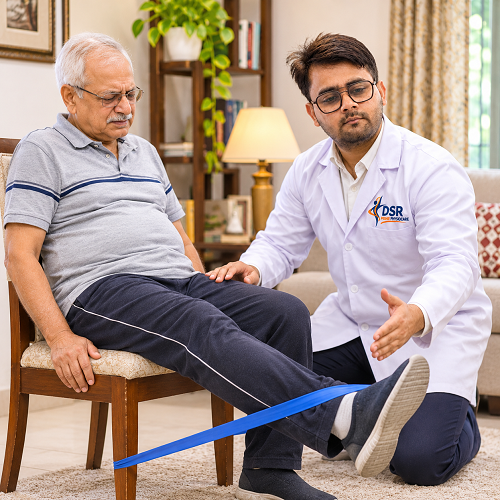
Common signs include:
- Slow walking speed: Taking longer to cover short distances than before.
- Shuffling steps: Moving the feet without lifting them properly off the ground.
- Frequent loss of balance: Feeling unsteady while walking, turning, or changing direction.
- Difficulty standing up: Struggling to rise from a chair or get out of bed.
- Leg weakness: Feeling that the legs cannot support body weight properly.
- Short or uneven steps: Taking smaller steps or putting more weight on one leg.
- Walking-related pain: Experiencing discomfort in the knees, hips, ankles, or lower back.
- Fear of falling: Avoiding walking because of concerns about losing balance.
These signs should not be dismissed as a normal part of ageing. They may indicate an underlying problem that needs attention.
Why Do Elderly People Experience Difficulty Walking?
Several physical and medical factors can affect walking ability in older adults. Often, more than one factor contributes to the problem.
1. Age-Related Muscle Weakness
Muscles gradually lose strength and mass with age. This process is known as sarcopenia. It can affect the muscles of the thighs, hips, calves, and lower legs, which play an important role in walking and maintaining balance.
As muscle strength decreases, elderly people may find it harder to:
- Stand up from a sitting position.
- Walk continuously without getting tired.
- Climb stairs or walk on uneven surfaces.
- Maintain stability while changing direction.
Reduced physical activity can make muscle weakness worse. When seniors avoid movement because of pain or fear of falling, their muscles may become weaker over time.
2. Arthritis and Joint Stiffness
Arthritis is another common reason older adults experience difficulty walking. It can cause joint pain, swelling, stiffness, and restricted movement.
Knee and hip arthritis can make everyday movements uncomfortable. For example, an elderly person may experience pain when standing, walking, bending the knees, or climbing stairs.
Joint stiffness may also affect walking patterns. Some people take shorter steps or shift their body weight to avoid putting pressure on painful joints.
Over time, reduced movement can contribute to further weakness and mobility limitations.
3. Poor Balance and Coordination
Walking requires coordination between the brain, muscles, joints, vision, and inner ear. These systems work together to maintain stability during movement.
Age-related changes, neurological conditions, vision problems, and certain medications can affect this coordination.
As a result, elderly people may experience dizziness, unsteadiness, difficulty turning, or a feeling that they might fall while walking.
Balance problems deserve attention because they can increase the risk of falls and related injuries
Other Medical Conditions That Can Make Walking Difficult in Older Adults
Apart from muscle weakness, arthritis, and balance problems, several medical conditions can affect the way elderly people walk. Identifying these conditions helps determine the right medical treatment and rehabilitation approach.
4. Parkinson’s Disease
Parkinson’s disease is a progressive neurological condition that affects movement control. It can make walking slower and less coordinated.
Older adults with Parkinson’s disease may experience:
- Small and shuffling steps.
- Difficulty starting or stopping while walking.
- Reduced arm movement during walking.
- Muscle stiffness and slow movements.
- Freezing episodes, especially while turning or passing through narrow spaces.
These symptoms can make independent walking more challenging. Medical management and appropriately supervised physiotherapy may help improve movement, balance, and walking safety.
5. Stroke and Neurological Problems
A stroke can damage areas of the brain responsible for controlling movement and coordination. Depending on the affected area, an elderly person may develop weakness or reduced control on one side of the body.
Common mobility-related effects include:
- Weakness in one arm or leg.
- Difficulty lifting one foot while walking.
- Uneven steps and poor coordination.
- Difficulty maintaining balance.
- Reduced walking confidence.
Some people also experience foot drop, where lifting the front part of the foot becomes difficult. This can cause the toes to drag along the ground and increase the risk of tripping.
Rehabilitation after medical assessment may include gait training, strengthening exercises, and functional movement practice.
6. Peripheral Neuropathy and Diabetes
Peripheral neuropathy occurs when nerves outside the brain and spinal cord become damaged. Diabetes is one possible cause of this condition.
When sensory nerves in the feet are affected, older adults may experience numbness, tingling, burning sensations, or reduced awareness of foot position.
This makes it harder to feel the ground properly while walking. Consequently, some people develop an unsteady walking pattern or have difficulty walking on uneven surfaces.
Regular medical care, proper foot assessment, and suitable rehabilitation can help address associated mobility problems.
7. Vision and Inner Ear Problems
Good vision and a properly functioning balance system are important for safe walking.
Age-related vision changes, cataracts, and other eye conditions can make it difficult to identify obstacles, judge distances, or walk safely in low-light conditions.
Similarly, problems affecting the inner ear can cause vertigo, dizziness, and unsteadiness.
Elderly people experiencing these symptoms may feel particularly uncomfortable when turning their heads, changing direction, or walking on uneven ground.
Appropriate eye care and medical evaluation of balance-related symptoms are important before deciding on a rehabilitation plan.
8. Medication Side Effects
Some medicines can cause dizziness, drowsiness, low blood pressure, or reduced alertness. These effects may interfere with walking stability, particularly in older adults who take multiple medications.
Certain sleeping medicines, sedatives, and other prescription drugs can contribute to falls or balance problems.
If walking difficulties begin after starting a new medicine or changing a dose, the prescribing doctor should review the medication. Elderly patients should never stop prescribed medicines without medical advice.
Why Do Some Elderly People Suddenly Become Unable to Walk?
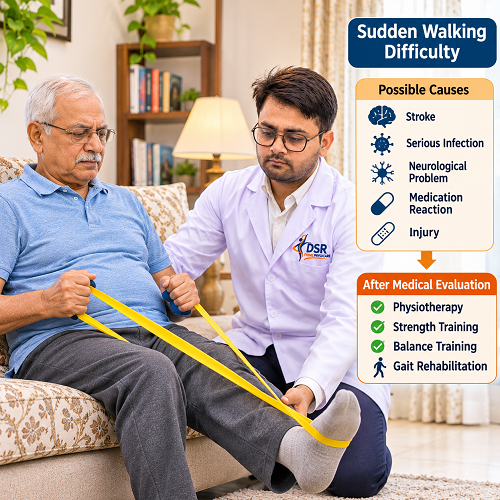
Sudden walking difficulty needs more attention than gradual changes in mobility. It may occur due to a stroke, serious infection, injury, sudden neurological problem, medication reaction, or other acute medical condition.
Warning signs include:
- Sudden weakness in one or both legs.
- New difficulty maintaining balance.
- Sudden confusion or unusual drowsiness.
- Severe dizziness or loss of coordination.
- New inability to stand or walk safely.
Important: Sudden inability to walk, especially with facial drooping, one-sided weakness, speech difficulty, or sudden vision changes, may indicate a stroke. Seek emergency medical attention immediately. Do not attempt walking exercises or wait for physiotherapy in such situations.
Even without typical stroke symptoms, sudden unexplained walking difficulty requires urgent medical assessment.
Once the underlying medical condition has been evaluated and the patient is medically stable, a suitable rehabilitation programme may help restore mobility and functional independence.
How Can Physiotherapy Help Elderly People With Walking Difficulties?
Physiotherapy can help older adults address mobility limitations caused by muscle weakness, joint stiffness, balance problems, and certain neurological conditions.
However, treatment should begin with an assessment to understand the underlying problem. The physiotherapy programme should then be adjusted according to the person’s medical condition, strength, mobility, and functional abilities.
At DSR Prime Physiocare, elderly patients can receive physiotherapy support focused on improving movement, strength, balance, and everyday mobility.
1. Walking and Gait Assessment
A gait assessment helps evaluate how a person walks. The physiotherapist observes walking speed, step length, foot movement, posture, and weight distribution.
This assessment can help identify movement difficulties and areas that may need rehabilitation.
2. Balance and Coordination Training
Balance training focuses on improving stability during everyday movements.
Depending on the patient’s abilities, rehabilitation may include supervised weight-shifting activities, controlled standing exercises, and movement coordination activities.
These exercises should be selected according to the patient’s fall risk and physical condition.
3. Muscle Strengthening Exercises
Strengthening exercises help target muscles that support walking, standing, and climbing stairs.
The programme may focus on the thighs, hips, calves, and other muscles involved in lower-body movement.
Exercise intensity should increase gradually according to the patient’s tolerance and clinical assessment.
4. Joint Mobility and Flexibility Exercises
Joint stiffness can restrict normal movement and make walking uncomfortable.
Appropriate mobility exercises and manual therapy may help improve joint movement and functional flexibility, depending on the underlying condition.
5. Functional Rehabilitation
Functional rehabilitation focuses on movements required for everyday independence.
This may include practising safe sit-to-stand movements, walking short distances, changing direction, and managing daily activities.
Elderly patients looking for professional support can explore physiotherapy for senior citizens in Noida.
Exercises That May Help Improve Walking Ability in Elderly People
Certain exercises may support muscle strength, flexibility, and balance in older adults. However, not every exercise is suitable for every person.
After an appropriate assessment, a physiotherapist may recommend activities such as:
- Seated knee extensions: Help activate and strengthen the thigh muscles.
- Supported heel raises: Target calf muscles involved in walking.
- Sit-to-stand practice: Helps develop strength needed for standing and sitting.
- Gentle ankle movements: Support ankle mobility.
- Supported weight shifting: Helps practise controlled weight distribution.
Exercises should be performed with appropriate support and supervision when necessary. People with severe weakness, recent falls, dizziness, or significant balance problems should not attempt challenging standing exercises independently.
How Can Elderly People Prevent Falls and Walking Difficulties?
Preventing falls is an important part of maintaining mobility and independence.
A few practical measures can improve walking safety:
- Remove loose rugs, clutter, and other tripping hazards.
- Install grab bars where additional support is needed.
- Ensure that rooms, corridors, and stairways have adequate lighting.
- Wear properly fitted footwear with good grip.
- Use a walking stick or walker when recommended by a healthcare professional.
- Follow an appropriate exercise programme to maintain strength and balance.
- Schedule regular medical check-ups and review medicines with the treating doctor.
Family members should also encourage safe movement instead of unnecessarily restricting all physical activity.
Frequently Asked Questions
1. Is difficulty walking a normal part of ageing?
Walking speed and muscle strength may decrease with age. However, significant difficulty walking, frequent falls, or new balance problems should not be considered inevitable. These symptoms may indicate an underlying condition that needs medical evaluation.
2. Can physiotherapy improve walking ability in elderly people?
Physiotherapy may help improve muscle strength, joint mobility, balance, coordination, and functional movement. Results depend on the underlying condition, overall health, and individual rehabilitation needs.
3. How often should elderly people do walking exercises?
Exercise frequency depends on physical capacity, medical conditions, and fall risk. A physiotherapist can recommend a suitable schedule and gradually adjust the exercise programme.
4. Is home physiotherapy suitable for elderly patients?
Home physiotherapy can be helpful for older adults who find travelling difficult or need rehabilitation in their usual living environment. The physiotherapist can assess mobility and recommend appropriate exercises based on the patient’s needs.
DSR Prime Physiocare provides home physiotherapy in Ghaziabad.
5. When should an elderly person see a doctor for walking difficulties?
Medical evaluation is important when walking becomes progressively difficult, pain affects movement, balance problems develop, or falls occur repeatedly. Sudden inability to walk or sudden neurological symptoms require emergency medical attention.
Help Elderly People Maintain Safe and Independent Mobility
Difficulty walking can affect an older adult’s confidence, independence, and quality of life. Muscle weakness, arthritis, neurological conditions, and balance problems can all contribute to reduced mobility.
Identifying the underlying cause is the first step towards appropriate care. Medical evaluation, suitable physiotherapy, strength training, and fall-prevention measures can help address mobility limitations.
At DSR Prime Physiocare, Shadab Rana (BPT, MPT – Sports Medicine) provides patient-focused physiotherapy support in Noida, Ghaziabad, and Delhi NCR.
For information about physiotherapy services or to discuss an elderly patient’s mobility concerns, contact DSR Prime Physiocare at +91 9354961295.
Early attention to walking difficulties can help older adults work towards safer movement and better functional independence.