Physiotherapy After Knee Replacement: Exercises, Recovery and Rehabilitation
Knee replacement surgery helps people with severe knee pain and damaged joints regain mobility. However, surgery alone does not restore complete muscle strength or normal movement. Proper rehabilitation is essential for improving knee flexibility, rebuilding strength and returning to daily activities.
Physiotherapy After Knee Replacement focuses on reducing stiffness, improving joint movement, strengthening surrounding muscles and developing a safe walking pattern. Patients may initially experience swelling, muscle weakness and difficulty bending or straightening the operated knee.
A structured physiotherapy programme helps address these problems through guided exercises, mobility training and progressive strengthening. The rehabilitation plan should always match the patient’s surgical procedure, physical condition and recovery progress.
Why Is Physiotherapy Important After Knee Replacement?
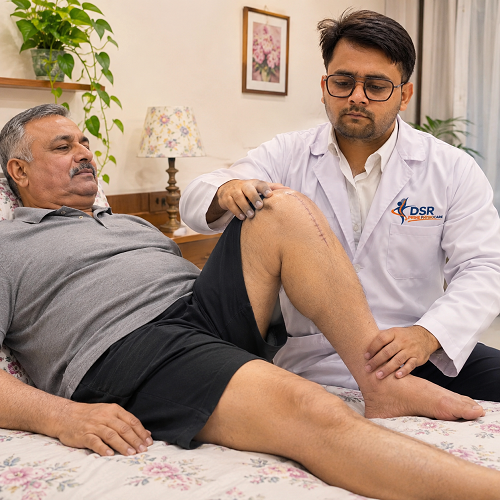
Physiotherapy plays an important role in recovery after total or partial knee replacement surgery. It helps patients regain movement and develop the strength needed for everyday activities.
The main benefits include:
- Improved knee mobility: Controlled exercises help restore knee bending and straightening.
- Better muscle strength: Strengthening the quadriceps, hamstrings and calf muscles improves leg control.
- Improved walking: Gait training helps patients develop a safer and more balanced walking pattern.
- Reduced stiffness: Regular prescribed movement helps maintain joint flexibility.
- Better balance: Functional exercises improve stability during standing and walking.
- Greater independence: Rehabilitation helps patients gradually return to activities such as sitting, standing and climbing stairs.
When Should You Start Physiotherapy After Knee Replacement?
Physiotherapy generally begins soon after surgery, once the patient is medically stable. According to NICE guidance, rehabilitation should ideally be offered on the day of surgery and no later than 24 hours after primary elective knee replacement, when clinically appropriate.
Early physiotherapy usually includes gentle ankle movements, quadriceps activation, assisted knee bending and supervised walking.
After hospital discharge, patients should continue their prescribed home exercise programme and attend supervised physiotherapy sessions as recommended.
The timing and intensity of exercises depend on the surgical procedure, wound condition, swelling, pain and the surgeon’s instructions.
Physiotherapy After Knee Replacement: Recovery Timeline
Recovery takes place gradually. The following timeline explains the general rehabilitation stages after knee replacement surgery.
| Recovery stage | Main rehabilitation goals |
| First 1–2 weeks | Initial movement, swelling management and assisted walking |
| Weeks 3–4 | Improve knee mobility and muscle control |
| Weeks 5–8 | Strengthening, balance and walking progression |
| Weeks 9–12 | Functional movement and walking endurance |
| 3–6 months | Continued strength and mobility improvement |
First 1–2 Weeks: Initial Recovery
The first two weeks focus on controlling swelling, activating thigh muscles and beginning safe movement.
Common exercises include ankle pumps, quadriceps setting and gentle heel slides. Patients also practise standing and walking with a walker or other prescribed support.
Weeks 3–4: Improving Knee Movement
During this stage, rehabilitation focuses on improving knee bending, straightening and muscle control.
A physiotherapist may introduce straight leg raises, seated knee bends and supported sit-to-stand exercises, depending on the patient’s progress.
Weeks 5–8: Strengthening and Balance
Patients gradually work on improving leg strength, walking distance and balance. Supported standing exercises, progressive resistance training and functional movement practice may be introduced.
Weeks 9–12 and Beyond: Functional Rehabilitation
Rehabilitation focuses on walking endurance, stair practice, balance and independence in everyday activities. Strength and mobility improvements may continue for several months.
These stages are general guidelines, not fixed deadlines. Recovery varies according to individual health, surgery and rehabilitation progress.
Best Physiotherapy Exercises After Knee Replacement
Exercises help restore knee movement and strengthen the muscles supporting the operated joint. A physiotherapist selects exercises according to the patient’s recovery stage.
1. Ankle Pumps
Lie on your back with your legs supported. Slowly point your toes away from your body and then pull them towards your shin.
Purpose: Encourages ankle movement and supports circulation during reduced mobility.
2. Quadriceps Setting
Lie with the operated leg straight. Tighten the muscles at the front of your thigh and gently press the back of your knee towards the bed. Hold briefly and relax.
Purpose: Activates the quadriceps muscles and improves knee extension control.
3. Heel Slides
Lie on your back and slowly slide the operated heel towards your body. Allow the knee to bend comfortably, then slide the heel back to its starting position.
Purpose: Helps improve knee bending and joint mobility.
4. Straight Leg Raises
Lie on your back with the operated leg straight. Tighten your thigh muscles, lift the leg slowly and lower it with control.
Purpose: Strengthens the quadriceps and improves leg control. Start only when you can maintain proper knee control and your physiotherapist approves.
5. Seated Knee Bends
Sit on a stable chair and slowly slide your operated foot backwards to bend the knee. Hold briefly and return to the starting position.
Purpose: Improves knee flexibility for sitting, standing and walking.
6. Sit-to-Stand Exercise
Sit on a stable chair with armrests if needed. Lean forward slightly and use your legs and armrests as instructed to stand. Slowly return to sitting.
Purpose: Improves functional leg strength and helps with everyday movements.
Do not force any exercise or ignore increasing pain. Follow the repetitions and frequency prescribed by your physiotherapist.
How to Improve Knee Bending and Straightening After Surgery?
Knee flexion and extension are two important movements during rehabilitation.
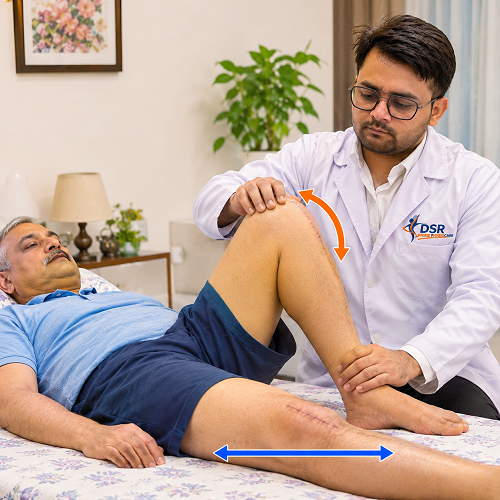
Knee flexion means bending the knee. It helps with sitting, climbing stairs and getting into a car.
Knee extension means straightening the knee. It supports stable standing and walking.
Heel slides and seated knee bends can help improve flexion, while quadriceps setting and appropriate extension exercises help improve straightening.
Patients should work towards gradual improvement rather than forcing a particular bending angle within a fixed timeframe.
Walking After Knee Replacement Surgery
Walking is an important part of rehabilitation. Most patients begin assisted walking soon after surgery when medically stable.
Initially, a walker may provide additional support. As muscle strength, balance and coordination improve, some patients progress to crutches or a walking stick.
Walking without support should begin only when the patient demonstrates safe walking ability and receives appropriate clearance.
Stair training is another important part of rehabilitation. A physiotherapist can teach patients how to climb and descend stairs safely using a handrail and prescribed walking aid.
Pain, Swelling and Precautions During Rehabilitation
Mild discomfort and swelling can occur during recovery. However, excessive activity may aggravate these symptoms.
Patients should follow these precautions:
- Use ice therapy as recommended by the healthcare professional.
- Elevate the operated leg when advised.
- Avoid sudden twisting and forceful knee movements.
- Do not start high-impact exercises without medical clearance.
- Follow prescribed weight-bearing instructions.
- Balance exercise with adequate rest.
- Follow wound care instructions.
- Take prescribed medication as directed.
Contact your doctor if you experience increasing redness, wound discharge, fever, worsening calf pain or sudden swelling. Chest pain or sudden breathlessness requires emergency medical attention.
Home Physiotherapy After Knee Replacement
Travelling to a clinic can be difficult during the initial recovery period. Home physiotherapy allows patients to receive rehabilitation support in a familiar environment.
A home-based programme may include knee mobility exercises, muscle strengthening, walking training, balance exercises and functional movement practice.
For patients in Ghaziabad, home physiotherapy services in Ghaziabad provide information about available home-based physiotherapy support.
How Long Does Physiotherapy Take After Knee Replacement?
The duration of rehabilitation varies between patients. Initial recovery may take several weeks, while improvements in muscle strength, endurance and mobility can continue for three to six months or longer.
Age, pre-surgery muscle strength, general health, surgical procedure and consistency with prescribed exercises can influence recovery.
Even after patients regain independent walking, continuing an appropriate home exercise programme helps maintain strength and mobility.
Frequently Asked Questions
1. Is physiotherapy necessary after knee replacement?
Yes. Physiotherapy helps restore knee movement, strengthen supporting muscles, improve walking and regain functional independence.
2. How soon can I walk after knee replacement surgery?
Many patients begin assisted walking on the day of surgery or within 24 hours, provided they are medically stable and cleared by their healthcare team.
3. How long does knee replacement rehabilitation take?
Initial rehabilitation generally takes several weeks. Strength and functional improvements may continue for three to six months or longer.
4. Can I do physiotherapy at home after knee replacement?
Yes. Patients can follow prescribed home exercises and receive supervised home physiotherapy when appropriate.
5. When can I walk without a walker?
There is no fixed timeline. Patients should stop using walking support only when they demonstrate sufficient strength, balance and safe walking ability.
6. Is pain normal during knee replacement exercises?
Mild discomfort may occur. However, sharp pain, increasing swelling or worsening symptoms should be discussed with the treating healthcare professional.
Get Professional Physiotherapy After Knee Replacement at DSR Prime Physiocare
Successful rehabilitation requires an individualised approach based on knee movement, muscle strength, balance and functional ability.
At DSR Prime Physiocare, Shadab Rana, Founder and Lead Physiotherapist, provides patient-focused physiotherapy with an emphasis on safe recovery and functional improvement.
He holds BPT and MPT (Sports Medicine) qualifications and has over four years of clinical experience in orthopaedic and rehabilitation care. His professional experience includes Synergy Health Care, Bone & Joint Orthopedic Clinic, The Physios Clinic and clinical internship at Yashoda Hospital, Nehru Nagar.
DSR Prime Physiocare provides physiotherapy services across Noida, Ghaziabad and Delhi NCR.
UPSMF Registration No.: 4210
For information about rehabilitation services, visit our physiotherapy services page.
Contact: +91 9354961295
Working Hours: 7:00 AM – 10:00 PM.
Take the right steps towards better knee movement, improved strength and greater independence with professional physiotherapy support.